

Total Ankle Replacement
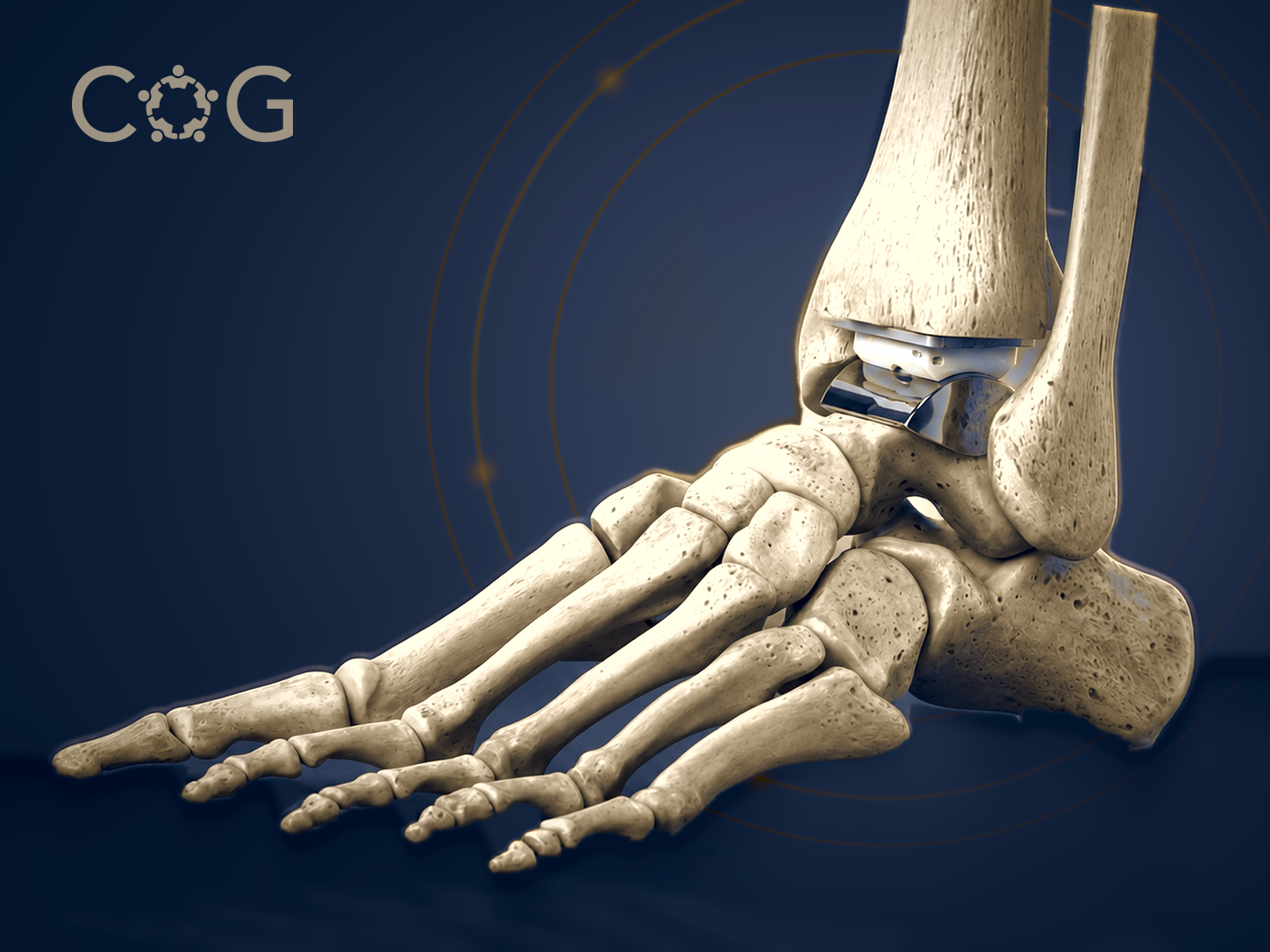
A total ankle replacement is an operation to replace an ankle joint that has been badly damaged by arthritis. The worn surfaces of the shin bone and the talus are removed and replaced with implants, with a bearing between them that allows the joint to keep moving.
Unlike an ankle fusion, which relieves pain by permanently joining the bones together, a replacement preserves movement at the ankle. Both operations are good at relieving arthritic pain, and neither is universally better — the right choice depends on your circumstances.
When is an ankle replacement considered?
An ankle replacement may be considered when:
Ankle pain from ankle arthritis is limiting your walking, work or sleep
Non-surgical treatments such as bracing, activity modification, medication and injections are no longer giving enough relief
Imaging confirms significant arthritis in the ankle joint
Your bone quality, alignment and soft tissues are suitable for implants
Who is it best suited to?
A replacement is generally more suitable if you are older, of lower physical demand and reasonably mobile, with good bone quality, healthy soft tissues around the ankle and reasonable alignment of the foot and ankle.
It is generally avoided where there is a very high activity demand, active infection, poor blood supply, significant bone loss, nerve problems affecting the foot, or marked deformity. In those situations a fusion is often the more reliable operation.
What does the operation involve?
The operation is performed under anaesthetic and usually takes around one to two hours. The damaged joint surfaces are removed and the implants are positioned, with alignment checked carefully during surgery. Most people stay in hospital for a night or two.
Recovery
Recovery is staged and varies with the individual, but a typical course looks like:
First two weeks: The ankle is protected, usually in a plaster, with no weight through the foot. Elevation matters a great deal in this period for controlling swelling.
Two to six weeks: Transitioning into a walking boot and gradually increasing weight through the foot as advised.
Six weeks to three months: Moving out of the boot into supportive footwear, beginning physiotherapy to restore movement and strength.
Three to twelve months: Continued improvement in comfort, walking distance and confidence. Swelling commonly persists for many months and is expected.
Risks
As with any major operation there are risks, which will be discussed with you in detail beforehand. These include infection, wound healing problems, blood clots, nerve injury, stiffness, ongoing pain, loosening or wear of the implant over time, and the possibility of further surgery including conversion to a fusion. The ankle is a small joint with thin soft tissue cover, which makes wound care particularly important.
Dr Janan's experience
Dr Janan completed fellowship training in Bristol, a major United Kingdom centre for ankle arthroplasty, working with high-volume ankle replacement surgeon Mr Stephen Hepple. He also trained in Tokyo under Professor Satoru Ozeki, past president of the Japanese Society for Surgery of the Foot, where he gained experience in ankle preservation and reconstruction techniques.
Because Dr Janan performs both ankle replacement and ankle fusion, the recommendation you receive is based on your circumstances rather than a preference for one technique.
Considering ankle replacement or fusion?
Book a consultation with Dr Janan Chandrananth to discuss which operation is better suited to your ankle, your activity level and your goals.
FAQs
Should I have a replacement or a fusion?
Both reliably relieve arthritic pain. A replacement preserves ankle movement and reduces extra load on neighbouring joints, but implants can wear or loosen over time and may need revision. A fusion is durable and permanent but sacrifices movement at the ankle, and over many years may place more load on nearby joints. Replacement generally suits lower-demand patients with good bone and alignment; fusion is often preferred for younger, higher-demand patients or where there is significant deformity.
You can read more in our patient blog where we discuss exactly this! Ankle Fusion vs Ankle Replacement: Which Is Right for Me?
How long does an ankle replacement last?
Modern ankle replacements have improved considerably, but they do not last indefinitely and the evidence base is smaller than for hip or knee replacement. Some patients will need revision surgery or conversion to a fusion during their lifetime. This is one of the reasons age and activity level weigh heavily in the decision.
Will I be able to walk normally afterwards?
Most people walk considerably more comfortably than before surgery, and preserving movement generally allows a more natural gait than a fusion. That said, a replaced ankle is not the same as a normal ankle, and some stiffness and swelling are common.
What activities can I return to?
Walking, swimming, cycling and golf are generally encouraged. Running, jumping and high-impact sport are usually discouraged because they accelerate wear on the implant. If those activities are important to you, that is a significant factor in favour of considering a fusion instead.
How long am I off my feet?
This depends on the details of your operation. Generally you should expect a period of limited weight-bearing in a plaster or boot for the first weeks, then a gradual transition to walking in a boot and later in normal footwear. Dr Janan will give you a specific plan for your ankle.
Can I have this done if I have had previous ankle surgery?
Often yes, but previous surgery, scarring, retained metalwork and the condition of the soft tissues all affect suitability. This is assessed on an individual basis with examination and imaging.